
ISSUE #017| THE LEADERSHIP CONTRARIAN
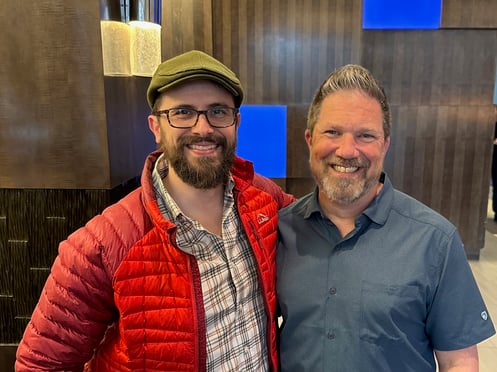
Last week I spent two days in Cambridge with a small group of experienced business leaders brought together by my friend, Ryan Levesque.
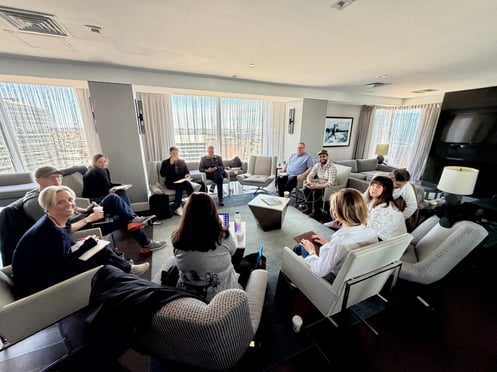
We weren’t there casually. This was a mastermind - an intentional space where each of us came prepared to put our business on the table. One at a time, we each had about 30 minutes in what’s called a “hot seat.”
You present what you’re working on, where you’re headed, what you’re wrestling with. And then the room goes to work - questions, pushback, perspective, insight.
When it’s done well - and this room did it well - you walk away with something rare: focused, intelligent input on your business, your decisions, and your reality.
There’s a reason this idea has been around for centuries. There’s wisdom, and even safety, in a multitude of counsel. Trying to go it alone isn’t just hard. It’s often unwise.
That’s one of the main reasons I was there. Not just to contribute, but to be sharpened.
Because the quality of the questions matters. Good questions don’t just give you answers. They help you see what you couldn’t see on your own.
And over those two days, as we worked through each business, a few things started to stand out. Not theories - observations. Things I heard, saw, and experienced that stuck with me.
So I want to share three of them with you.
1. There’s Still Real Power in Being in the Room
One of the things that stood out to me right away was how much it mattered that we were actually in the room together.
Not on Zoom. Not sending emails back and forth. We were sitting across from each other, listening in real time, fully engaged in the conversation. And it changed things.
In a virtual setting, even with the best intentions, it’s easy to drift. You can turn your camera off, check a message, step away. Someone walks into your office and pulls your attention. It’s not just that your attention drifts - it’s that, over time, it’s almost expected. We’ve all settled into it.
You can be present… without really being present.
That doesn’t happen when you’re in the room.
When someone is in the hot seat, everyone else is sitting there with them - listening, asking questions, taking notes. If you’re not paying attention, it’s obvious. And honestly, it’s a little uncomfortable, because in that setting, it doesn’t just look like distraction.
It looks like you don’t care.
That’s easier to hide on Zoom. There’s no real eye contact. No shared physical space. You’re one small square among many, and it’s easy to fade into the background.
But in the room, even a small shift gets noticed. Where your eyes go matters. Whether you’re engaged is visible. And because of that, the level of presence goes up, not because everyone suddenly became more disciplined, but because the environment demanded it.
And if I’m honest, it wasn’t just the environment. It was the investment.
Everyone in that room had made a decision to be there. Time, energy, money - none of it was insignificant. In a season where time matters more than almost anything, we had all chosen to step away from our businesses to sit in that room together.
That creates something.
There’s an unspoken expectation: this matters. What we’re doing here matters. What you say matters. The questions matter. And you can feel it.
You don’t want to waste the opportunity or other people’s time. You show up ready - not just to talk, but to listen, to think, and to engage. There’s a level of trust in that.
I’m trusting you to take this seriously. And you’re trusting me to do the same.
And that combination - environment and investment - is what changes how people show up.
2. The Right Questions Change Everything
The second thing that stood out to me was the quality of the questions.
Not just the answers, the questions.
When you put your business in front of a room like that, you realize pretty quickly that the real value isn’t just in what people tell you to do. It’s in how they help you see.
Someone asks a question you hadn’t considered. Or comes at your situation from an angle you weren’t looking at. Or presses on something that didn’t quite hold up.
And you feel it.
You feel where your thinking is clear… and where it isn’t.
That happened over and over again.
People weren’t just giving advice. They were asking thoughtful, direct questions that exposed gaps, assumptions, and blind spots - sometimes things you didn’t even realize you were carrying.
And if you were willing to sit with it - if you didn’t rush to defend or explain - it was incredibly helpful.
But there was another layer to it that I didn’t expect.
There were moments where a question exposed something I assumed was a weakness. Something I hadn’t handled perfectly. Something I even felt a little embarrassed to say out loud.
I remember thinking, this is where I’m about to get corrected.
But that’s not what happened.
The response from the room was almost the opposite.
“Look at what you actually did.”
“Look at what you learned.”
“Look at how that positioned you.”
What I thought was a weakness… wasn’t.
It was a strength I hadn’t seen clearly.
And it wasn’t just me. That dynamic played out again and again with the others.
And it shifted something for me.
I realized that while we can think we are strong in an area when we really aren't the opposite is also true.
We can sometimes think we have a weakness and yet it turns out that it’s a strength.
And sitting there, it became clear:
Most leaders can think well when they’re asked the right questions. The problem is, we don’t always ask them.
We move fast. We make decisions. We push forward. But we don’t always stop long enough to ask, or be asked, the kinds of questions that sharpen our thinking.
So we end up solving the wrong problems - or solving the right problems in the wrong way - not because we’re incapable, but because we’re working from an incomplete picture.
And that’s hard to fix on your own.
It’s even harder if you’re not around people who are willing to ask you the kind of questions that make you stop, think, and see more clearly.
3. You Don’t Hit a Strategy Ceiling - You Hit a Personal One
The third thing that stood out to me had less to do with strategy… and more to do with the leader.
As we worked through different businesses, different challenges, different pivots, a pattern started to emerge.
It wasn’t just about what people were doing. It was about how they were handling it.
Some leaders could sit in the tension of not having a clear answer yet. They could take in feedback without reacting. They could hold multiple perspectives at once. They stayed steady, even when things got uncomfortable.
Others struggled more - not because they weren’t capable, but because the pressure showed up in how they thought, how they responded, and the decisions they made.
And what made it stand out even more was this:
These weren’t inexperienced leaders. These were people who had built real businesses, navigated growth, made hard decisions, and in many cases, done it more than once.
And yet, every single person in that room had walked through something significant.
Not just in business.
In life.
Moments they didn’t plan for. Situations they couldn’t control. Outcomes they couldn’t fix.
And you could feel it.
There was a humility in the room. A groundedness. Not a “we’ve got this figured out” kind of confidence - something deeper.
They didn’t believe they were bulletproof. They didn’t act like every problem had a solution.
They had learned, through experience, that some things don’t get solved.
They get endured. They get navigated. They get lived through.
And very few people do that well on their own.
Part of what I was seeing wasn’t just individual strength, it was what happens when you put leaders like that in the right environment, around the right people, over time.
And somehow, that changes you.
It builds something underneath the surface.
Depth. Stability. Roots.
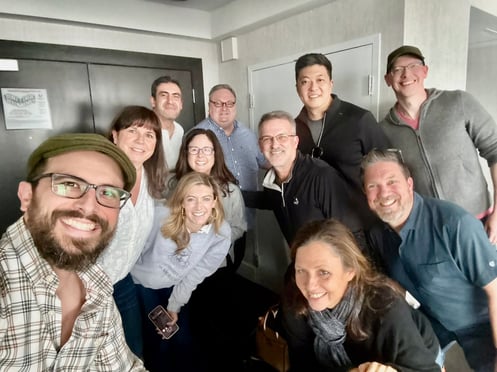
I found myself sitting there more than once thinking, this is a sacred moment.
Not because of anything dramatic, but because of what was present in the room - honesty, humility, perspective, and people who had been through enough to know what actually matters.
And it reminded me:
When things get uncertain… when the ground shifts… when you’re being asked to rethink what you’ve built…
Your business doesn’t just need a better strategy.
It needs a leader who can handle that moment.
Because at some point, every leader runs into something they didn’t plan for, something that doesn’t have a clean answer.
And in that moment, what matters most isn’t what you know.
It’s who you are and whether you’ve built the kind of depth that allows you to stay grounded, think clearly, and keep moving forward.
Because in the end:
Most leaders don’t hit a strategy ceiling. They hit a personal one.
Which means your business will eventually grow to the level your leadership can sustain - and not beyond it.
Closing
I’ve thought about that weekend a lot since I got back.
Not just the ideas. Not just the conversations.
But the feeling of it.
Being in a room where people were fully present, where the questions mattered, where the answers weren’t rushed, and where there was enough honesty and humility to actually see things clearly.
That’s rare.
And it’s easy to underestimate how much that kind of environment shapes us.
Because most of us are moving fast - making decisions, solving problems, trying to keep everything moving forward.
But we don’t always stop long enough to ask:
Are we in the kind of environments that actually make us better?
Are we around people who will challenge how we think and help us see what we can’t see on our own?
Are we developing the kind of depth that allows us to handle what comes next?
Because at some point, it won’t just be about your strategy.
It will be about you and whether you’ve built the kind of leadership that can sustain what you’re trying to grow.
So here’s the question:
Where do you need to change your environment… so you can become the leader your business actually needs?
Until next time,
Keep learning.
Keep growing.
And God bless,
Michael


