

ISSUE #014| THE LEADERSHIP CONTRARIAN
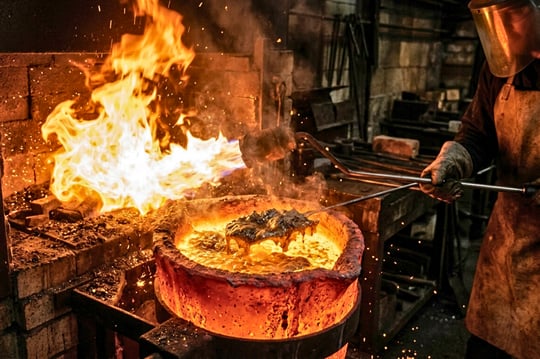
When gold is pulled from the ground, it doesn’t look valuable. It’s mixed with dirt, rock, and impurities.
So what do they do?
They apply heat. Not a little heat - extreme heat. Volcanic, dragon-breath kind of heat.
And something interesting happens when the temperature rises.
The impurities don’t stay hidden. They rise to the surface.
The refiner doesn’t create the impurities. The heat reveals them.
Leadership Under Pressure
Most leaders look solid when things are calm - when the business is growing, the team is performing, and life is stable. But pressure changes everything.
Deadlines tighten. Revenue drops. People disappoint you. Uncertainty creeps in.
And something else happens that most leaders don’t talk about: pressure amplifies the fear of discovery—the fear that something in you is going to get exposed; that you don’t have it all together. That you might be seen differently than you want to be seen.
And in that moment, it becomes clear what’s actually there.
Pressure doesn’t create your leadership. It reveals it.
You don’t find out who you are as a leader in calm; you find out under pressure.
There’s an old truth in leadership: you can grow a company beyond a leader’s capacity for a while - but it won’t hold. Eventually, the company comes back down to the level of the leader. Pressure is what makes that visible.
The Real Question: What Does Pressure Reveal?
The way you view pressure matters more than the pressure itself. You can see it as exposure…or you can see it as a test. Not punitive. Not personal. Revealing.
It shows you where you actually are.
If you have a growth mindset, that’s good news. You get data. You get clarity. You get a chance to improve what’s actually true - not what you hoped was true.
If you don’t, it can feel like exposure. Like failure. Like something’s wrong with you. But that’s not what’s happening. Pressure is just doing its job.
And you don’t get to control when it shows up. VUCA doesn’t send a calendar invite.
Some leaders become reactive. Others stay intentional.
Not because the situation is different, but because what’s inside them is different.
You’ve seen this.
The numbers come in, and they’re off. One leader reacts - blames, controls, fires off messages. Another pauses - takes ownership, gets clear, and leads forward.
Same numbers. Different leader.
Circumstances don’t separate leaders. Responses do.
You walk into a hard conversation at home. You can feel it almost immediately.
You get defensive. You justify. You shut down. Or you escalate and try to win.
Or… you notice it rising and you don’t let it take over. You listen. You slow it down. You stay connected.
Same moment. Different response.
The moment isn’t the problem. What it pulls out of you is.
When the heat rises, something comes to the surface.
For some leaders, it shows up as pleasing, guarding, and forcing.
For others, it shows up as aware, connected, and intentional.
Same pressure. Different response.
This is the difference between reactive leadership and creative leadership.
And under pressure, something will rise first - a pattern you’ve practiced, a way you’ve learned to operate - but that’s not the end of the story.
Because after it rises to the surface… you still have a choice.
Will you default to it… or lead beyond it?
Where Real Growth Happens
Now here’s where people get tripped up.
They hear this and think: “Great. So this just proves I don’t have it.” Like what showed up under pressure is the final verdict.
It’s not.
Pressure isn’t judging you. It’s revealing you.
This is an opportunity.
You don’t always know how strong, grounded, or intentional you are until you’re tested. And when you are, you get clarity. You see how much gold is actually there.
“I thought I had more control there.” “I thought I’d grown past that.”
That’s not failure. That’s valuable data if you let it be.
This isn’t easy. But it’s where real growth actually happens.
And it shows you both at the same time - where you need to grow and where you’ve already grown. Sometimes you realize you didn’t handle it the way you thought you would. And sometimes you realize you handled it better than you used to.
Both matter.
Don’t waste it.
Reactive vs. Creative Leadership
So let’s come back to what this means in practice.
Reactive leaders don’t have a character flaw. They have unrefined patterns - patterns built over time, patterns that can be changed over time.
The difference is this: a reactive leader sees the pressure or problem that shows up, and reacts to it defensively. A creative leader sees that same pressure, and responds with clarity and ownership.
That’s the real separator.
Not pressure itself—but what pressure reveals and what you do with it.
It’s not as simple as reacting versus responding. Underneath the reaction is a whole set of patterns - beliefs, habits, and ways of operating that feel normal.
Sometimes it’s the need to be liked. Sometimes it’s the need to be right. Sometimes it’s the need to stay in control.
And none of it feels wrong in the moment. It feels justified. Necessary. Like the right priority.
That’s what makes it hard to see.
So the real separator isn’t whether you react. It’s whether you’re willing to see what’s underneath your reaction and grow beyond it.
What Creative Leadership Really Means
When I say creative leadership, I’m not talking about being artistic or imaginative. I’m talking about leading in a way where you’re aware, connected, and able to respond with clarity and ownership under pressure.
And when you lead that way, something else happens.
People move toward you instead of away from you. The team aligns more naturally. The work flows faster. The organization begins to move together toward the vision.
Reactive leadership might still get results, but it creates friction. It slows things down. It pushes people out of alignment with you, with each other, and with the goal.
And you don’t build creative leadership in calm moments. You build it by noticing what shows up under pressure and refining it over time.
Here’s how it actually gets built:
In the moment, you pause when you want to react. You take ownership when you want to blame. You stay grounded when you want to get defensive.
Not perfectly. But repeatedly.
That’s how the dross gets removed. That’s how you become a different leader - not a different person, but a more effective version of you: more grounded, more capable, more aligned.
And ultimately… more valuable to your team, your organization, and yourself.
Pressure is Coming
You don’t get to control when or how. But you do get to see what’s actually there.
Sometimes you’ll realize you’re stronger than you thought because you’ve been doing the work. And sometimes you’ll see the gaps - the places you’re not as ready as you believed, the moments that are still above your current capacity.
That’s not a verdict. That’s feedback.
And it’s your opportunity to get honest, get clear, and get to work on what’s real.
Because you don’t become a different leader by hoping. You become a different leader by building the capacity that pressure is asking for.
Don’t waste what it shows you.
Pressure is feedback. Most people ignore it. Great leaders use it.
One thing to do this week:
Pay attention to the next moment of pressure you experience. Not the outcome, but your reaction.
What showed up in you? What did you default to? What did you avoid?
Then ask yourself one simple question:
What would a more aware, connected, and intentional version of me have done instead?
Start there.
If this was helpful to you, hit reply with one word:
YES or NO.
That’s it.
Until next time,
Keep learning.
Keep growing.
And God bless,
- Michael


