[Issue #039] My AI Confession and Silent Films
Amidst all the flurry of AI over the last 24 months, and recent reports of our possible doom, we’ve heard a multitude of stories about how AI might be the next tool to catapult humanity forward or to enslave us as our new master.
To make sense of it, writers have been citing history and the repeated challenges we humans have had with new technology over the centuries. Some of the fear was warranted, and some of it turned out to be overblown. And sometimes the warnings were half right.
We’ve Been Here Before
Two stories caught my attention this week: Socrates’ concern about what writing would do to our minds, and talkie films ruining an industry.
In Plato’s Phaedrus, Socrates tells a story warning that writing could weaken our memories and give us the appearance of wisdom without real understanding. Instead of having to remember what we’d learned, we could just write it down and reference it later. Clearly, writing has helped us accomplish a great deal. But his concern about confusing access to information with understanding still gives us something to think about. Especially now.
And we know about his concern because Plato wrote it down. How ironic.
When New Technology Changes the Work
However, my favorite story was about how talkie films changed the lives of musicians who played along with silent movies. The American Federation of Musicians reports that about 22,000 theater musicians lost their jobs as talkies took over. That’s a lot of musicians making a living playing their instruments.
I remember studying film history in college and learning about how recordings changed the film industry. It went like this. In 1926, the movie Don Juan was released with the very first recorded musical soundtrack. It was quickly followed in 1927 by The Jazz Singer, which included the actors talking and singing. As you can imagine, this changed everything. The era of the silent film was coming to an end and nobody had a clue how much things would change.
As theaters across the country prepared to show talkies, they no longer needed a local musician or orchestra to play along with every showing. A new technology had taken away the work that supported thousands of people.
But here’s what I found so interesting. The film industry that destroyed those jobs had helped create them only a few years earlier. To fully appreciate what happened and how fast it happened, it’s important to understand the timeline.
In 1895, the Lumière brothers held the very first recorded, public film screenings in Paris where people paid to see moving pictures in a dark room. Imagine that! People were just beginning to experience something you and I have grown up taking for granted.
Ten years later, a theater called the Nickelodeon opened in Pittsburgh, Pennsylvania. It charged a nickel to get inside. (Here's a random fact: the word Nickelodeon is a combination of the word nickel, and odeon, which is the ancient Greek word for theater.)
The idea was so popular that, by 1908, an estimated 8,000 nickelodeons were operating across America. They often had a pianist playing along with the silent films, and larger theaters later employed orchestras.
Within roughly 20 years, movies had become a source of work for thousands of musicians. However, new technology usually breeds more discoveries and more innovations. Some people understood that but most people regularly made the mistake of assuming that the new changes were here forever. Thus, talkies made 20,000+ jobs obsolete within just a few years.
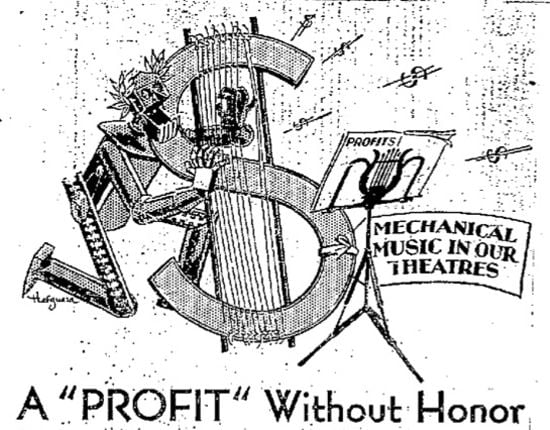
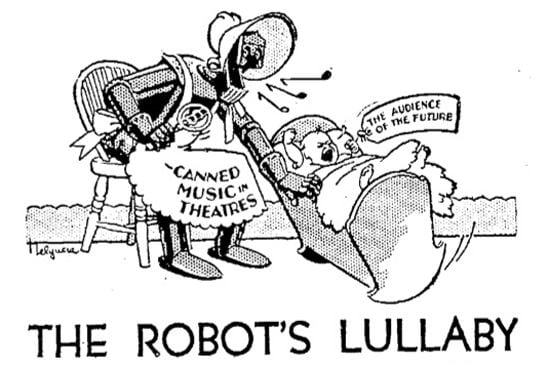
The musicians’ union fought back, launching the Music Defense League in 1930 to rally public support against recorded music in theaters. Some of the ads from that campaign have a strange resemblance to the conversations today. [Source: The Smithsonian]
Twenty Years Can Change Everything
If you’re over 40 years old, 20 years doesn’t seem that long ago. Can you remember where you were 20 years ago? It was September of 2006, just five years after 9/11.
Our daughter was 10, and our company was only four years old. While 20 years seems like a long time with no context it quickly becomes a long time ago when I look at my 30 year old daughter and remember how different it was running a fairly new company.
Now imagine how different the work in your own company will look, five years from today. Where will your company be? What will your people need to know about how to do their job differently than today? And are you preparing for that?
Being Good at the Old Way Isn’t Enough
Those musicians didn’t lose their jobs because they were bad at them. They lost them because the way theaters did business changed. Looking ahead wouldn’t necessarily have saved every job, but being good at the old way of doing things wasn’t enough to protect them.
That’s the hard truth. Sometimes the fears are right. Sometimes technology takes away a job or changes it. Sometimes technology creates opportunities, but it never promises to preserve the opportunities it creates.
And that leaves you and me with a choice. Will we adapt or try to hold on to a past that was never promised to stick around? Or maybe we don’t choose either and what we do choose is to not focus on it.
So What Do We Do About AI?
How will we adapt to the changes going on in our industries, in the economy, and in our own businesses?
I would suggest to you that it means putting a few things in writing and then helping your people put them into practice. Be proactive.
Here are few recommendations as a starting place moving forward for most of us.
1. Tell Your Customers How You Use AI
First, I’d put a clear statement on your website about how your company uses AI
increase the trust
I’d rather explain our approach than leave our customers to guess
2. Give Your Team Clear Guidelines
Second, you need an AI plan for your company
Your people need to know which tools they can use, what information they can put into them, and what needs to be checked by a human before it goes out the door. They also need to understand where AI will actually help with the work you’ve hired them to do.
3. Practice Using it Together
Third, work through it with them.
An internal document that describes your AI policy gives you a place to start. Your staff still needs practice, feedback, and someone they can ask when they aren’t sure.
Don’t Assume Your Company is Adapting
I want you to pay attention to what is already happening. This is shaping our world, how people work, and how your competitors work.
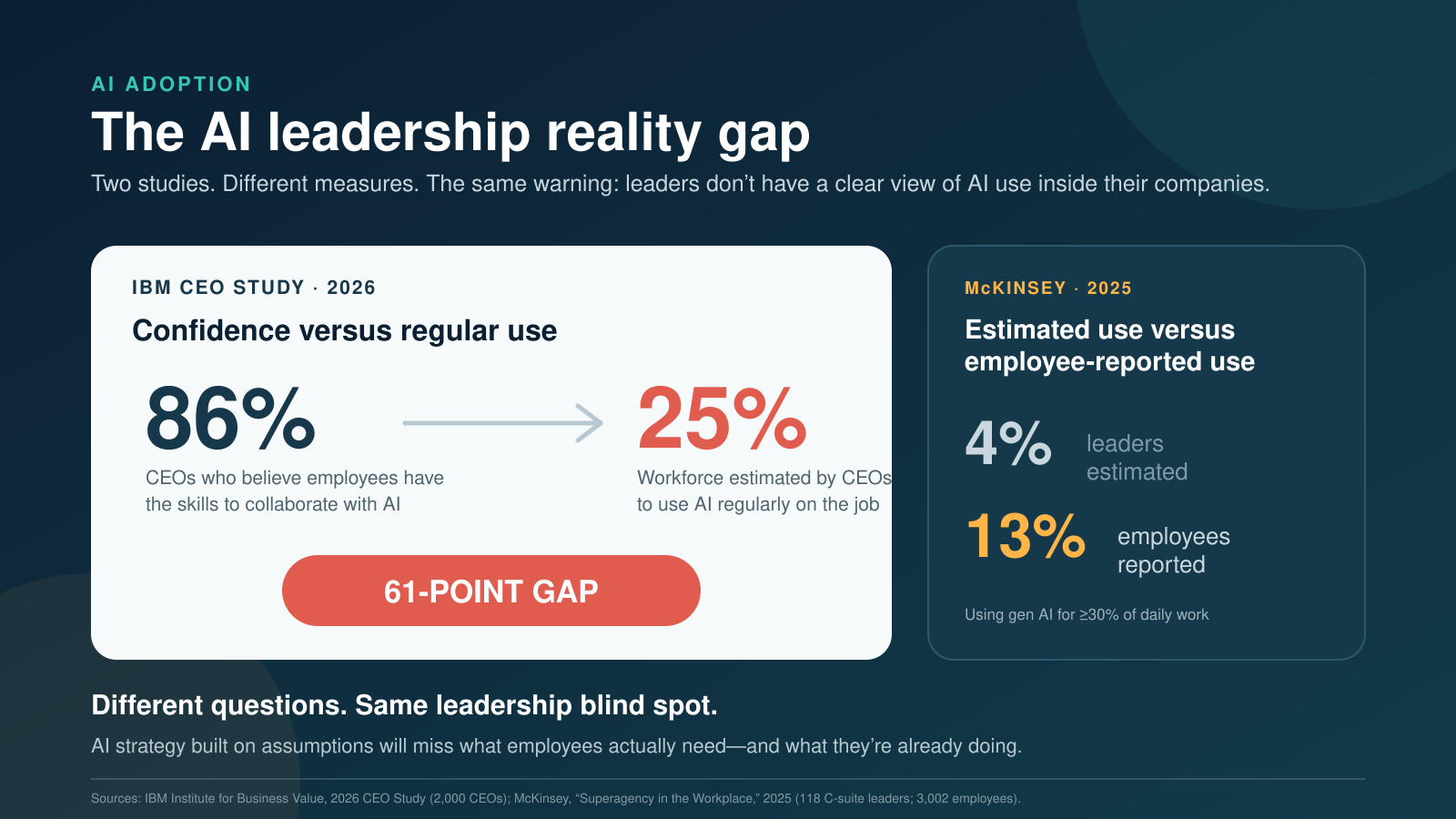
In fact, the research is pretty interesting. IBM’s 2026 study surveyed 2,000 CEOs around the world. Of those CEOs, 86% believed their employees had the skills to collaborate with AI. Yet they estimated that only 25% of their workforce was even using it regularly as part of the job.
Believing your people can use a tool and knowing how they’re actually using it are two different things.
The Train Has Already Left the Station
Another way to put this all in perspective is to think about how much technology has changed the way we view travel. For much of human history, a journey across land meant walking, riding an animal, or traveling in a wagon. Then came trains, cars, and planes. It used to take us weeks to get from New York to San Francisco and now six hours in a plane seems like a long trip.
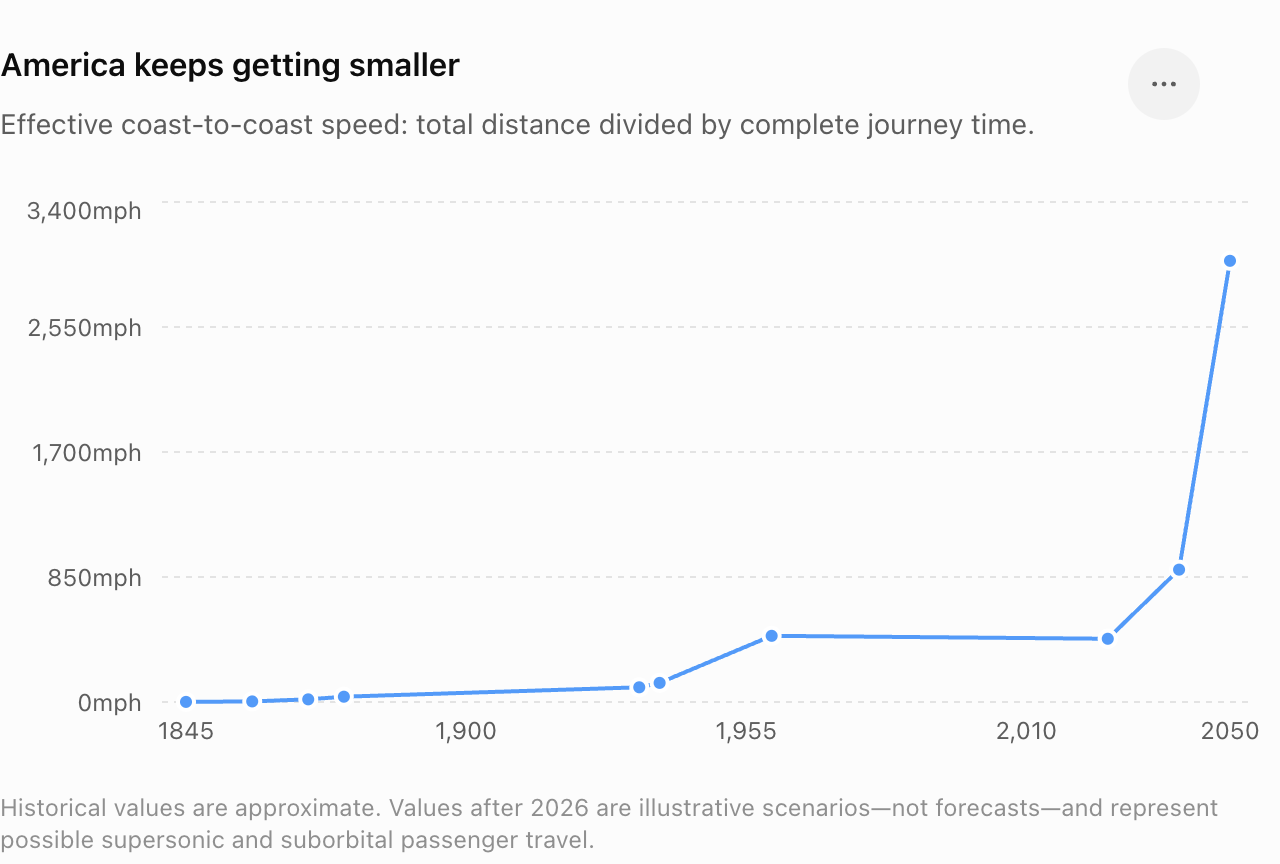
the train has already left the station when it comes to AI
How I’m Using AI
we use AI to help with our human work
I even use AI to help me with The Leadership Contrarian newsletter. We use it much like a contractor uses power tools to get the work done instead of using only hand tools.
I use AI to help me research and edit my writing, but the concepts, ideas and most of the words are mine. Every week I deliberate over what I’ll share. I spend four to six hours working on this newsletter because I don’t want to bombard your inbox or social media with AI slop or poor writing that nobody bothered to edit.
I write using my computer and spell check. I have AI give me feedback, and then two humans in our office give me their feedback. I’m still responsible for what lands in your inbox and whether it’s worth asking you to spend a few minutes reading.
My goal is to share my thoughts and my heart about life as a leader, and how I believe you and I can do it better. That comes from over 40 years of learning about leadership and how to encourage others to rise up and be good at it too. Including the challenges we face with AI and how it’s changing how we work and how we lead.
Because if you’re a leader, you have an amazing opportunity to care for others and make the world a better place for all of us.
Thanks for caring about that.
What’s this Look Like in Your Company?
If you’re wondering what this should look like in your company, Kathryn and I would be glad to help you think it through. Helping leaders grow and lead their companies well is the work we’ve been doing for more than two decades.
Until next time,
Keep learning.
Keep growing.
And God bless,
Michael Redman
Half a Bubble Out (HaBO)
Business Consulting | Leadership Coaching